
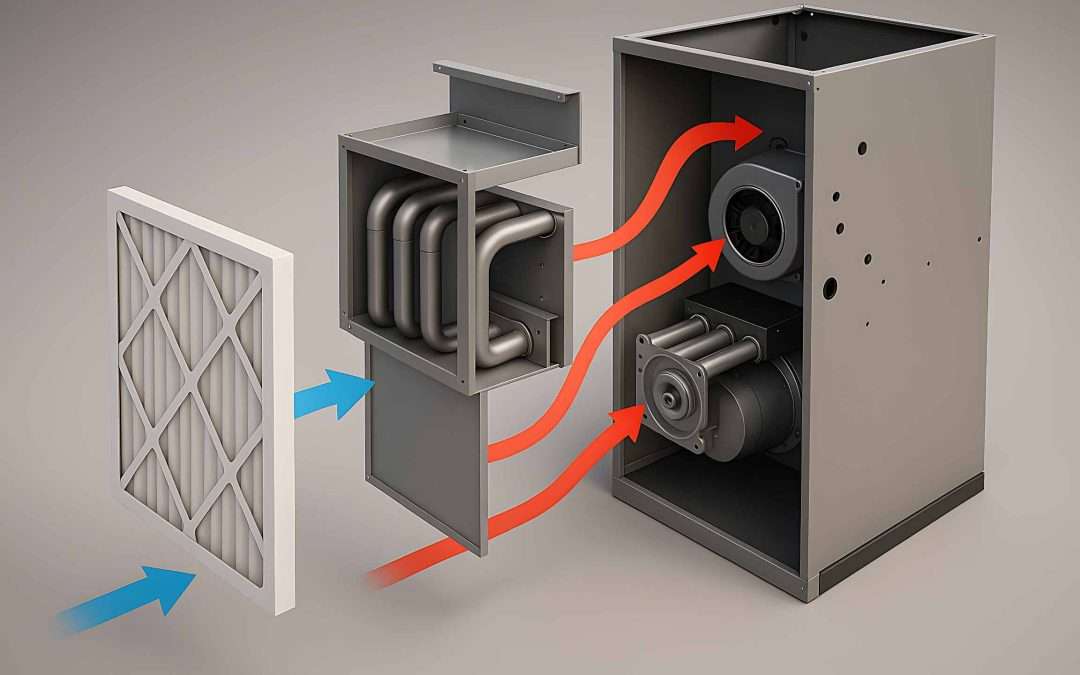
A cracked heat exchanger is a fracture in the metal wall of the furnace component that separates your home’s breathable air from toxic combustion gases. This condition is extremely dangerous because it can allow deadly, odorless carbon monoxide (CO) to leak directly into your airstream and circulate throughout your home. Due to this severe safety risk, a furnace with a cracked heat exchanger must be shut down and replaced immediately.
A cracked heat exchanger is a life-threatening furnace failure.
- It Leaks Carbon Monoxide: This is the primary danger of a cracked heat exchanger.
- Repair is Not an Option: For safety reasons, a cracked heat exchanger cannot be repaired.
- Most Common in Older Furnaces: Units over 15 years old are at the highest risk.
- Professional Inspection is Key: Cracks are often microscopic and require special tools to detect.
Table of Contents
- What is a Furnace Heat Exchanger?
- How Does a Heat Exchanger Crack?
- The #1 Danger: Carbon Monoxide Poisoning
- Signs of a Cracked Heat Exchanger vs. CO Poisoning
- Why This is Not a DIY Inspection
- Frequently Asked Questions About Cracked Heat Exchangers
- Your Family’s Safety is the Top Priority
What is a Furnace Heat Exchanger?
The heat exchanger is the heart of your furnace. It is a sealed metal chamber, or a series of tubes, where fuel is burned to generate heat.
Your home’s air is blown across the outside of this hot metal, warming it up before it travels through your ducts. The heat exchanger’s most important job is to keep the toxic exhaust gases—like carbon monoxide—safely contained and vented outside your home.
How Does a Heat Exchanger Crack?
Over thousands of heating cycles, the metal of the heat exchanger expands when it gets hot and contracts when it cools down. This repeated stress, combined with age and potential corrosion from moisture, can cause microscopic cracks to form and grow over time.
An oversized furnace that short cycles or a furnace with poor airflow due to a clogged filter can also accelerate this process.
The #1 Danger: Carbon Monoxide Poisoning
The reason a cracked heat exchanger is considered a red-tag, emergency situation is the risk of carbon monoxide (CO) poisoning.
Definition: Carbon Monoxide (CO) Carbon Monoxide is a toxic, invisible, and odorless gas produced during the combustion of fuel. When inhaled, it displaces oxygen in your blood, starving your vital organs of the oxygen they need to function. Even low levels of exposure can cause serious health problems, and high concentrations can be fatal in minutes.
A crack provides an escape route for CO to mix with your home’s warm air. Because you can’t see or smell it, you could be breathing it in without ever knowing.
Signs of a Cracked Heat Exchanger vs. CO Poisoning
It’s crucial to recognize the symptoms in both your furnace and your family.
| Signs in Your Furnace | Symptoms of CO Poisoning |
| Soot or black carbon buildup around the unit. | Dull headache and dizziness. |
| A strong, unpleasant odor similar to formaldehyde. | Nausea, vomiting, and shortness of breath. |
| Water pooling on the floor around the furnace. | Confusion and blurred vision. |
| The furnace’s flame appears yellow and dancing, not blue. | Loss of consciousness. |
If you suspect CO poisoning, evacuate your home immediately and call 911.
Frequently Asked Questions About Cracked Heat Exchangers
Can a cracked heat exchanger be repaired? No. For safety reasons, it is against industry standards and manufacturer guidelines to weld or repair a cracked heat exchanger. The only safe and correct solution is to replace the entire furnace unit.
How do you find a crack in a heat exchanger? Technicians use special tools, including cameras and combustion analyzers, to detect cracks, which are often invisible to the naked eye. This is why a professional annual inspection is so critical.
Will my carbon monoxide detector alert me? Yes. Every home with a fuel-burning appliance MUST have working carbon monoxide detectors. A CO detector is your first line of defense and will sound an alarm if it senses the presence of the gas.
How much does it cost to fix a cracked heat exchanger? Since the unit cannot be repaired, the cost is the full price of a new furnace installation. The heat exchanger is one of the most expensive parts, making replacement the only financially viable option.
Does a tune-up check for a cracked heat exchanger? Yes. A thorough inspection of the heat exchanger is the most important part of any professional furnace tune-up and safety check.
My furnace is only 10 years old. Can it have a crack? While it is much more common in furnaces over 15 years old, a crack can happen at any age due to a manufacturer defect or extreme operating conditions. This is another reason why annual inspections are so important.
Your Family’s Safety is the Top Priority
The risk of carbon monoxide poisoning is serious, and it’s why we treat a cracked heat exchanger with the utmost urgency. The single best way to protect your family is through prevention: install CO detectors and schedule a professional furnace inspection every single year.
By: The Team at Tim’s Heating & Refrigeration Last Updated: October 1, 2025 Credentials: Otter Tail County’s trusted choice for HVAC service with over a decade of experience in residential and commercial heating systems.