A sudden spike in your heating bill is often caused by a dirty furnace filter restricting airflow, drafty windows allowing heat to escape, or a lack of professional maintenance lowering your system’s efficiency. Other common culprits include leaky ductwork, inadequate attic insulation, an outdated thermostat schedule, or an aging furnace that has lost its ability to effectively convert fuel into heat. Addressing these issues can lower your monthly costs significantly.
Stop burning money this winter by checking these common issues.
- Check the Filter: A clogged filter is the #1 cause of HVAC inefficiency.
- Seal the Gaps: Caulk around windows and doors to stop heat escape.
- Tune It Up: Dirty burners burn more fuel to create the same amount of heat.
- Check the Ducts: Leaks in the basement or attic waste massive amounts of energy.
Table of Contents
- The Shock of a High Winter Bill
- Culprit 1: The Dirty Air Filter
- Culprit 2: Drafts and Air Leaks
- Culprit 3: Leaky Ductwork
- Culprit 4: Lack of Annual Maintenance
- Culprit 5: An Outdated Thermostat Strategy
- Culprit 6: Poor Insulation
- Culprit 7: An Aging Furnace
- Frequently Asked Questions About Heating Bills
- Stop Wasting Energy Today
The Shock of a High Winter Bill
Opening your utility bill in January or February can be a shock. While energy prices do fluctuate, a sudden, unexplained spike in usage usually points to a problem with your home or your HVAC system.
If your furnace has to run longer to maintain the same temperature, your bill goes up. Here are the 7 most common reasons why this happens.
Culprit 1: The Dirty Air Filter
This is the most common—and easiest to fix—reason for high bills.
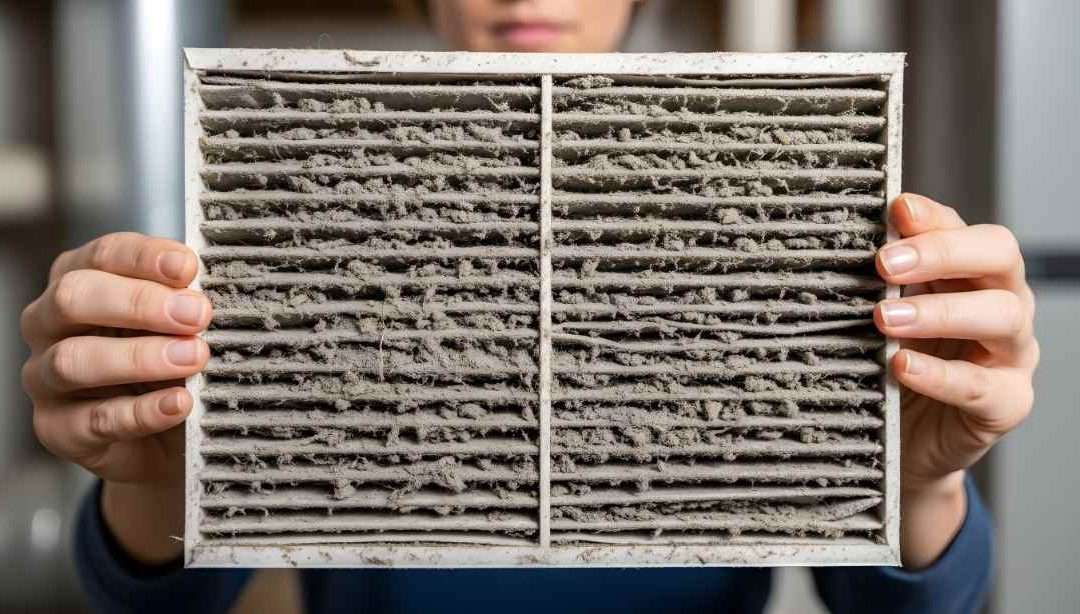
When your air filter is clogged with dust and pet dander, the furnace blower motor has to work much harder to pull air through it. This increases electricity usage. More importantly, the restricted airflow prevents the heat exchanger from transferring heat efficiently, causing the burner to run longer to heat the house.
Culprit 2: Drafts and Air Leaks
Your furnace might be working perfectly, but if your home is leaking, you are paying to heat the outdoors.
Definition: Building Envelope
The “building envelope” is the physical separator between the conditioned interior of your home and the cold air outside. If your envelope (walls, windows, roof) is “leaky,” your furnace has to run constantly to replace the heat that escapes through the cracks.
Check the caulk around your window frames and the weatherstripping on your exterior doors. If you can feel a cold draft, you are losing money.
Culprit 3: Leaky Ductwork
According to Energy Star, the average home loses 20% to 30% of the air that moves through the duct system due to leaks, holes, and poorly connected ducts.
If your ducts run through an unheated basement, attic, or crawlspace, and there is a gap in the metal, you are pumping hot air directly into those empty spaces instead of your living room.
Culprit 4: Lack of Annual Maintenance
A neglected furnace is an inefficient furnace. Over time, soot builds up on the burners and dust coats the blower motor blades.
Impact of Neglect:
- Dirty Burners: Poor combustion means you get less heat from the gas you pay for.
- Dirty Blower: The fan cannot move air effectively, extending run times.
- Wear and Tear: Parts work harder, leading to expensive repairs later.
| Maintenance Task | Efficiency Benefit |
| Cleaning Burners | Ensures complete combustion of fuel. |
| Cleaning Blower | Moves more air with less electricity. |
| Calibrating Gas Pressure | Prevents over-firing (wasting gas). |
Culprit 5: An Outdated Thermostat Strategy
If you keep your thermostat at a constant temperature 24/7, you are missing out on savings.
Setting your thermostat back 7-10 degrees for 8 hours a day (while you are asleep or at work) can save as much as 10% a year on heating and cooling. If you forget to do this manually, a programmable or smart thermostat can do it for you automatically.
Culprit 6: Poor Insulation
Heat naturally rises. If your attic insulation is thin, compressed, or missing, the heat your furnace produces migrates right through your ceiling and out your roof.
If you have frequent ice dams on your roof in the winter, it is a strong sign that heat is escaping through your attic due to poor insulation.
Culprit 7: An Aging Furnace
Finally, the equipment itself may be the problem. A furnace that is 15-20 years old is simply less efficient than a modern unit.
Older units may have an AFUE rating of 70% or 80%, meaning 20-30 cents of every dollar you spend on gas goes right up the chimney. As they age, internal wear makes them even less efficient.
Frequently Asked Questions About Heating Bills
Does using a space heater save money?
Generally, no. Electricity is usually more expensive than natural gas. Using a space heater in one small room might save money if you turn the central furnace down drastically, but running space heaters alongside a normal furnace setting will increase your total costs.
Should I close vents in unused rooms?
No. Closing too many vents increases pressure in the duct system, which forces more air out of leaks and strains the blower motor, potentially lowering efficiency.
Will a new furnace lower my bill?
Yes. Upgrading from an old 70% efficient furnace to a new 96% efficient model will immediately reduce your gas usage by roughly 26%.
How much does a dirty filter add to my bill?
The Department of Energy estimates that a dirty filter can increase energy usage by 5% to 15%.
Is it cheaper to leave the heat on all day than to reheat the house?
No, this is a myth. It takes less energy to reheat a home than it does to maintain a high temperature against heat loss all day long. Setbacks save money.
Stop Wasting Energy Today
You don’t have to accept high heating bills as a fact of life in Minnesota. By checking your filter, sealing drafts, and scheduling a professional tune-up with Tim’s Heating & Refrigeration, you can ensure your system is running at peak efficiency, keeping your home warm and your wallet happy.
By: The Team at Tim’s Heating & Refrigeration
Last Updated: January 30, 2026
Credentials: Otter Tail County’s trusted choice for HVAC service with over a decade of experience in residential and commercial heating systems.