
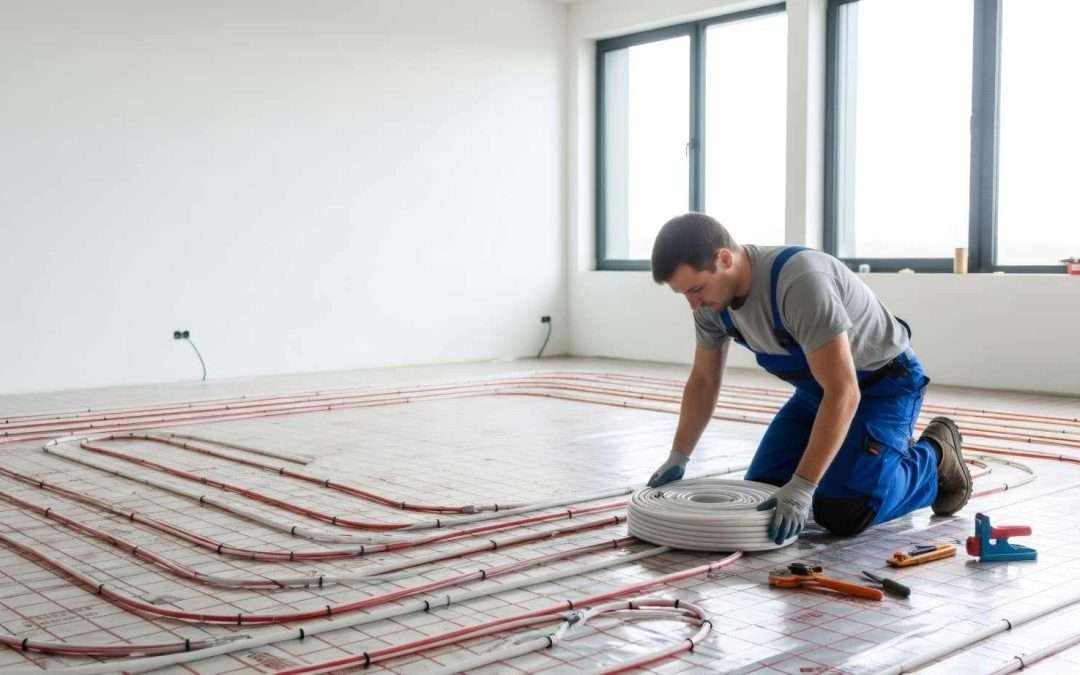
In-floor radiant heating is a premium heating system that uses a network of hot water tubes (hydronic) or electric mats installed beneath your flooring to provide invisible, silent warmth. Unlike forced-air furnaces that blow hot air through vents, radiant heat warms objects and people directly from the ground up. This method eliminates cold spots and drafts, offering superior comfort and energy efficiency for bathrooms, basements, or your entire home.
Turn your cold floors into your home’s best feature.
- True Comfort: Heat rises evenly from the floor, keeping your feet warm and head cool.
- Invisible Luxury: No vents, radiators, or noise—just pure, consistent heat.
- Energy Efficient: You feel warmer at lower thermostat settings, saving on fuel.
- Cleaner Air: It doesn’t blow dust or allergens, making it ideal for sensitive noses.
Table of Contents
- What is In-Floor Radiant Heating?
- Hydronic vs. Electric: Which Type is Right for You?
- The Unmatched Benefits of Heated Floors
- Where Can You Install Radiant Heat?
- The Installation Process: What to Expect
- Frequently Asked Questions About Radiant Heating
- Upgrade Your Home to Ultimate Comfort
What is In-Floor Radiant Heating?
Imagine stepping out of the shower onto a warm tile floor in the middle of a Minnesota winter. That is the experience of in-floor radiant heating.
Instead of heating the air and blowing it around the room (where it quickly cools and rises to the ceiling), radiant systems heat the floor structure itself. The floor then becomes a massive, gentle radiator, radiating warmth upward to heat the furniture, the walls, and you.
Definition: Radiant Heat
Radiant heat is the transfer of heat energy from a warm surface to a cooler object without heating the air in between. It is the same sensation as feeling the warmth of the sun on your face on a cool day.
Hydronic vs. Electric: Which Type is Right for You?
There are two main ways to heat a floor. The right choice depends on the size of the project.
| Feature | Hydronic (Hot Water) | Electric (Resistive Mat) |
| Heat Source | A boiler heats water that pumps through tubing. | Electricity heats a wire mesh mat. |
| Best For | Whole homes, large basements, additions. | Small bathrooms or single small rooms. |
| Operating Cost | Lower. Gas/propane is cheaper than electricity. | Higher. Electricity can be expensive to run. |
| Installation | More complex; requires a boiler and pumps. | Simpler; connects to household wiring. |
Note: At Tim’s Heating & Refrigeration, we specialize in high-efficiency hydronic systems that can heat your entire home.
The Unmatched Benefits of Heated Floors
Why do homeowners consider this the “ultimate upgrade”?
- Total Silence: There is no blower fan, no “whoosh” of air, and no creaking ducts. The system is virtually silent.
- Design Freedom: With no supply vents on the floor or baseboard radiators along the walls, you can place your furniture anywhere you like.
- Better Air Quality: Forced-air systems circulate dust, pet dander, and allergens. Radiant heat does not move air, making it the healthiest choice for allergy sufferers.
- Efficiency: Because the heat is concentrated near the floor where you are, you can typically set your thermostat 2-4 degrees lower than a forced-air system and feel just as warm.
Where Can You Install Radiant Heat?
While you can install it anywhere, it is most popular in areas with cold flooring materials:
- Basements: It transforms a cold, damp concrete slab into a cozy living space.
- Bathrooms: Tile is naturally cold to the touch, making it the perfect candidate for warmth.
- Kitchens: Ideally suited for tile or stone floors often found in kitchens.
- Garages: Keep your car warm and your workshop comfortable all winter.
- New Additions: It’s often easier to run tubing to a new room than to extend old ductwork.
The Installation Process: What to Expect
Installing a hydronic radiant system is a major construction project, best done during a new build or a major renovation.
The General Workflow:
- Subfloor Preparation: We inspect the subfloor to ensure it is level and ready.
- Tubing Layout: Flexible PEX tubing is laid out in a precise pattern to ensure even heat distribution.
- Thermal Mass: Often, a thin layer of concrete or gypsum is poured over the tubes. This mass holds the heat and releases it slowly.
- Manifold Connection: The tubes are connected to a manifold system that controls the flow of hot water from the boiler.
- Flooring: Your final floor covering (tile, engineered wood, etc.) is installed on top.
Frequently Asked Questions About Radiant Heating
Does radiant floor heating replace my furnace?
It can! A properly sized hydronic system can be the primary heat source for your entire home, eliminating the need for a furnace entirely.
What types of flooring work best?
Ceramic tile, stone, and concrete are the best conductors of heat. Engineered wood and vinyl also work well. Thick carpet acts as an insulator and is generally not recommended.
Is it expensive to run?
Hydronic systems are generally very efficient to run, especially when paired with a modern, high-efficiency boiler.
What if a tube leaks?
Leaks are extremely rare. The PEX tubing used is incredibly durable and is installed as a continuous loop with no fittings or joints under the floor where a leak could occur.
How long does it take to heat up?
Radiant systems have a slow response time. It may take a few hours to bring a cold room up to temperature, which is why they are designed to maintain a steady temperature rather than being turned on and off frequently.
Upgrade Your Home to Ultimate Comfort
In-floor heating isn’t just a way to heat your home; it’s a way to improve your quality of life. If you are building a new home or planning a renovation in Otter Tail County, contact Tim’s Heating & Refrigeration. Let us show you how we can bring the luxury of warm floors to your project.
By: The Team at Tim’s Heating & Refrigeration
Last Updated: December 20, 2025
Credentials: Otter Tail County’s trusted choice for HVAC service with over a decade of experience in residential and commercial heating systems.