
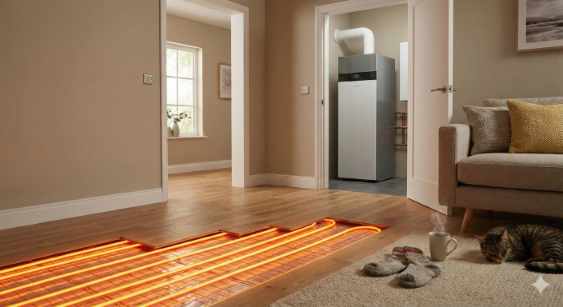
A boiler is a home heating system that heats water or steam, not air. This hot water is then circulated through pipes to radiators, baseboard heaters, or in-floor radiant tubing to heat your home. Boilers are known for providing a silent, even, and deeply comfortable radiant heat that doesn’t dry out the air or spread dust like a forced-air furnace, making them a premium choice for home comfort.
Boilers provide a different, more consistent kind of warmth.
- Heats Water, Not Air: Delivers heat through hot water (hydronic) systems.
- Provides Radiant Heat: Warms objects and people directly, not just the air.
- Improves Air Quality: Doesn’t use a blower, so it doesn’t circulate dust or allergens.
- Runs Silently: Operates without the noise of a furnace fan turning on and off.
- Lasts Longer: A well-maintained boiler can often last 20 years or more.
Table of Contents
- What is a Boiler and How is it Different?
- How Boilers Provide Heat: The Power of Radiant Heat
- Boilers vs. Furnaces: A Quick Comparison
- Is a Boiler System the Right Choice for Your Home?
- Frequently Asked Questions About Boilers
- Experience a Different Kind of Warmth
What is a Boiler and How is it Different?
When most people think of “heating,” they think of a furnace. A furnace uses a blower to push hot air through a network of ducts and vents. This is called a “forced-air” system.
A boiler is the heart of a “hydronic” system. It doesn’t heat air at all. Instead, it heats water in a sealed tank. A pump then circulates this hot water or steam through a closed loop of pipes to heat your home.
How Boilers Provide Heat: The Power of Radiant Heat
Boilers deliver warmth through radiant heat, which is a key reason they feel so comfortable.
Definition: Radiant Heat
Radiant heat is a form of energy that heats objects and people in a room directly, rather than just heating the air. Think of the way sunlight warms your face on a cold day—that is radiant heat. This allows you to feel warm and comfortable at a lower air temperature.
This hot water is delivered to your rooms in two primary ways:
- Radiators or Baseboard Heaters: These are the most traditional methods. Hot water runs through them, and they radiate heat into the room.
- In-Floor Radiant Heating: This is the ultimate in home comfort. Hot water tubes are installed directly underneath your floor, turning your entire floor into a gentle, silent, and incredibly comfortable radiator.
Boilers vs. Furnaces: A Quick Comparison
Understanding the main differences can help you see why some homeowners strongly prefer boilers.
| Feature | Boiler System | Furnace System |
| Heat Type | Radiant Heat (from hot water/steam) | Forced Air (from a blower) |
| Comfort | Silent, even, consistent warmth. No drafts. | Can create hot/cold spots and drafts. |
| Air Quality | Excellent. Doesn’t circulate dust or allergens. | Fair. Circulates all dust, dander, and allergens. |
| Noise Level | Virtually Silent. | Noticeable noise from the blower. |
| Efficiency | Modern units are extremely energy efficient. | Modern units are also very efficient. |
Is a Boiler System the Right Choice for Your Home?
A boiler is an excellent choice for many Minnesota homeowners, especially if you value comfort and air quality.
A boiler might be perfect for you if:
- You or your family members suffer from allergies, asthma, or dry winter air.
- You can’t stand the drafty, dry heat and noise from a forced-air furnace.
- You want to invest in the ultimate comfort of in-floor radiant heating.
- You own an older home in the area that is already equipped with radiators.
Frequently Asked Questions About Boilers
Are new boilers energy efficient?
Yes. Modern, high-efficiency boilers are incredibly efficient and can significantly reduce your fuel bills compared to older models. They are a smart, long-term investment.
How long does a boiler last?
A well-maintained boiler has an exceptional lifespan, often lasting 20 years or more. This is generally longer than the average 15-20 year lifespan of a furnace.
Do boilers need maintenance?
Yes. Just like a furnace, a boiler needs an annual professional maintenance visit. A technician will check the safety valves, inspect for leaks, and ensure all controls are working correctly.
Are boilers noisy?
No. One of their most popular features is that they are virtually silent. You won’t hear a blower click on and off all night—just quiet, consistent warmth.
Can a boiler provide hot water for my sinks and showers?
Some high-efficiency models, often called “combi-boilers,” can provide both home heating and domestic hot water, eliminating the need for a separate water heater.
Is in-floor heating expensive to run?
No, it’s one of the most efficient ways to heat a home. Because the heat radiates from the entire floor surface, you can feel comfortable at a lower thermostat setting, saving energy.
Experience a Different Kind of Warmth
A boiler system offers a kind of comfort that a furnace simply can’t replicate. If you’re tired of dusty air, noisy blowers, and cold drafts, a modern boiler with radiant heat might be the perfect solution for your home.
By: The Team at Tim’s Heating & Refrigeration
Last Updated: October 10, 2025
Otter Tail County’s trusted choice for HVAC service with over a decade of experience in residential and commercial heating systems.