
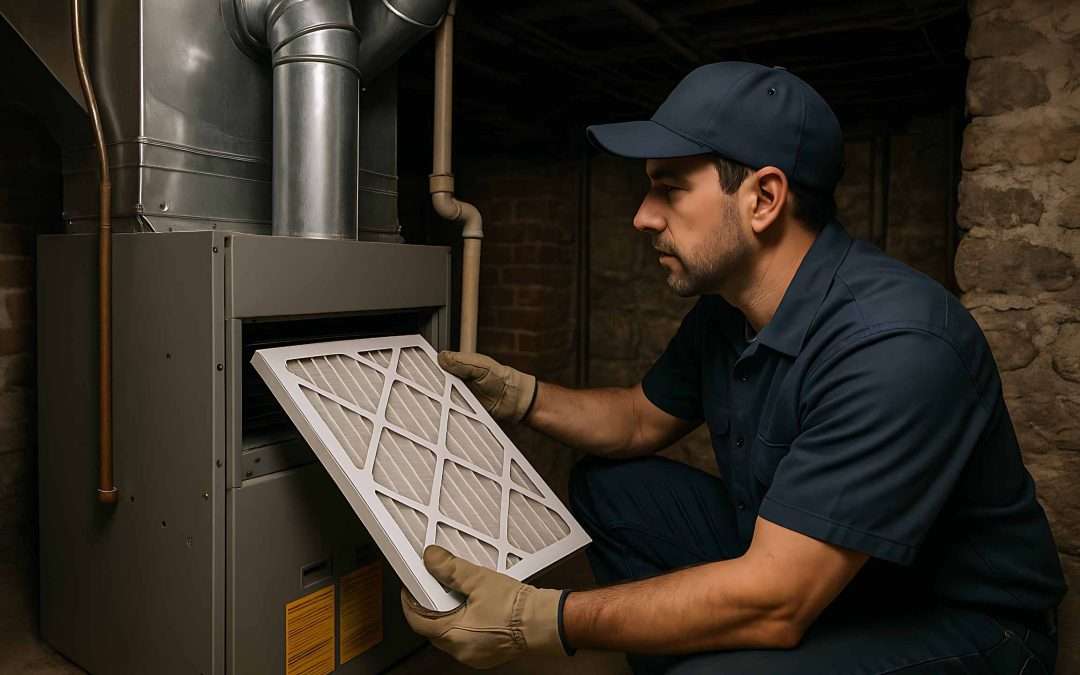
A furnace filter is a screen that cleans the air your heating system circulates. Its primary job is to capture dust, pet dander, and other airborne particles, protecting your furnace’s sensitive components from damage. Changing your filter every 1-3 months is the single most important DIY task for maintaining your furnace’s efficiency, improving your home’s air quality, and preventing costly breakdowns.
Changing your furnace filter is the easiest way to protect your HVAC system.
- Check Monthly: Look at your filter every 30 days and replace it when it’s visibly dirty.
- Match the Size: Use the exact dimensions printed on the side of your current filter.
- Choose the Right MERV: A MERV rating of 8-13 is ideal for most Minnesota homes.
- Protect Your System: A clean filter prevents restricted airflow, which can damage your furnace.
c
Table of Contents
- What is a Furnace Filter?
- Why Changing Your Filter is So Important
- Understanding Filter Types and MERV Ratings
- How to Change Your Furnace Filter: A 5-Step Guide
- Frequently Asked Questions About Furnace Filters
- The Easiest Way to a Healthier HVAC System
What is a Furnace Filter?
Think of a furnace filter as the lungs of your HVAC system. As your furnace draws in air from your home to be heated, it first passes through the filter.
This screen is designed to trap airborne contaminants. This not only cleans the air you breathe but, more importantly, it protects the delicate internal components of your furnace, like the blower motor, from getting clogged with dust and debris.
Why Changing Your Filter is So Important
Forgetting to change your furnace filter is one of the most common and costly mistakes a homeowner can make. When a filter becomes clogged with dirt, air cannot pass through it easily.
This restricted airflow forces your furnace to work much harder to heat your home. This strain leads directly to higher energy bills, poor heating performance, and can eventually cause the system to overheat and break down.
Understanding Filter Types and MERV Ratings
The most important factor when choosing a filter is its MERV rating.
Definition: MERV Rating MERV stands for Minimum Efficiency Reporting Value. It’s a scale from 1 to 20 that measures a filter’s effectiveness at capturing airborne particles. A higher MERV rating means the filter can trap smaller particles.
For most residential homes in our area, a filter with a MERV rating between 8 and 13 offers the best balance of high-quality air filtration without restricting airflow too much for the system.
| MERV Rating | Captures Particles Like… | Best For |
| MERV 1-4 | Pollen, Dust Mites, Carpet Fibers | Minimum protection, not generally recommended. |
| MERV 5-8 | Mold Spores, Pet Dander, Hairspray | The standard for most residential homes. |
| MERV 9-13 | Bacteria, Smoke, Auto Fumes | Excellent for homes with pets, allergies, or asthma. |
| MERV 14-20 | Viruses, All Bacteria, Carbon Dust | Hospital-grade; can restrict airflow in standard home systems. |
How to Change Your Furnace Filter: A 5-Step Guide
This is a simple task that every homeowner can do in just a few minutes.
- Turn Off the Power: For safety, turn off the power switch located on or near your furnace.
- Locate the Filter: Find the filter compartment. It’s a slot, usually on the side or bottom of the furnace where the main return air duct enters.
- Remove the Old Filter: Slide the old filter out. Before you throw it away, note the size dimensions printed on its cardboard frame.
- Insert the New Filter: Slide the new, correctly-sized filter in. Make sure the arrow printed on the frame is pointing toward the furnace, in the direction of airflow.
- Turn the Power Back On: Replace the compartment cover and turn the power switch back on. You’re all set!
Frequently Asked Questions About Furnace Filters
How often should I really change my filter? Check it monthly. A good rule is to replace it every 3 months, but homes with pets, smokers, or allergy sufferers should change it every 30-60 days for the best results.
What happens if I forget to change my furnace filter? A clogged filter will force your furnace to work harder, leading to higher energy bills and potential overheating. In a worst-case scenario, it can cause expensive damage to the blower motor.
Which way does the arrow on the furnace filter go? The arrow must always point in the direction of the airflow, which is toward the furnace’s main unit (the blower motor). This ensures the filter traps particles correctly.
Does a more expensive filter mean it’s better? Not always. A hospital-grade filter (MERV 14+) can be too restrictive for a standard residential furnace, leading to airflow problems. Stick to the MERV range recommended by your furnace manufacturer.
Can I clean and reuse my furnace filter? Only if you have a special “washable” filter. Standard pleated or fiberglass filters are disposable and should be thrown away when they are dirty, as washing them can damage the filter media.
Where is my furnace filter located? The filter is almost always located in a slot on the furnace itself, right where the large return air duct connects to the main unit. Look for a removable cover that’s about 1-inch wide.
The Easiest Way to a Healthier HVAC System
Regularly changing your furnace filter is the simplest, most effective step you can take to keep your heating system running efficiently and your indoor air clean. It’s a small task that pays huge dividends in lower energy bills, fewer repair calls, and a more comfortable home.
By: The Team at Tim’s Heating & Refrigeration Last Updated: October 1, 2025 Credentials: Otter Tail County’s trusted choice for HVAC service with over a decade of experience in residential and commercial heating systems.